IMBC Convenes High-Level Strategic Dinner to Advance the India–Mexico Framework for 2026
Hyatt Polanco, Mexico City, December 16, 2025
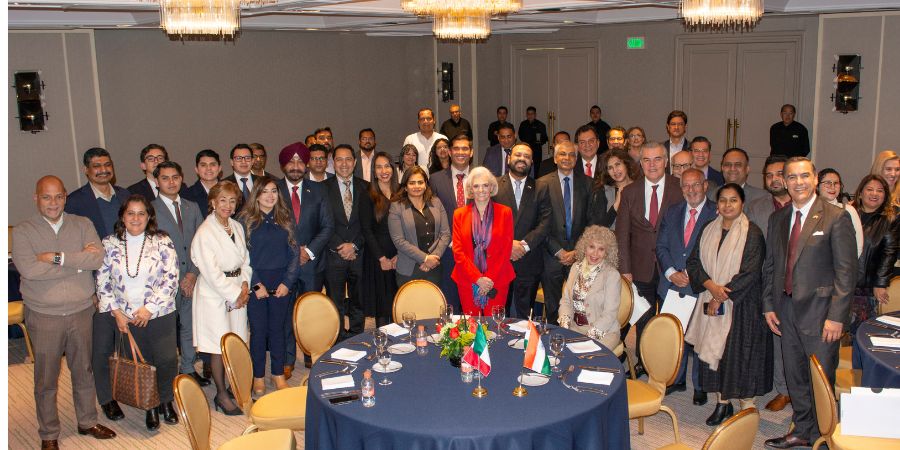
The India–Mexico Business Chamber (IMBC) convened its End-of-Year Strategic Dinner on Tuesday, bringing together senior diplomatic, legislative, governmental, and business leaders to discuss the future direction of bilateral economic cooperation between India and Mexico.
Held under the theme “Strengthening Bilateral Foundations: A Strategic India–Mexico Framework for 2026,” the event took place at a time of heightened global economic transition, marked by supply-chain reconfiguration, renewed emphasis on industrial policy, and growing attention to regulatory certainty as a driver of long-term investment.
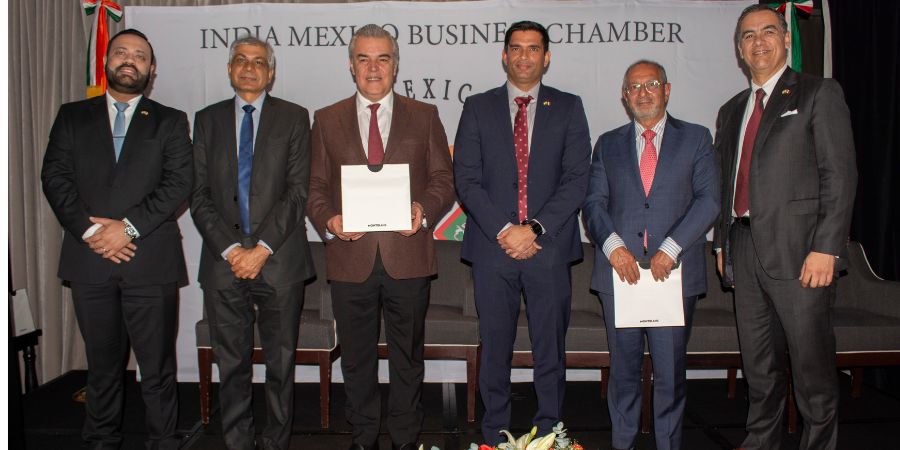
The Strategic Dinner was attended by high-level representatives from both countries, including Pankaj Sharma, Ambassador of India to Mexico; Federico Salas, Former Ambassador of Mexico to India; Francisco Cervantes Díaz, former President of the Mexican Business Coordinating Council and representative of the National Investment Council; as well as IMBC leadership Amit Miglani, Javier Mestre, and Anurag Tripathi.
Speakers emphasized that the India–Mexico relationship has moved beyond a focus on trade expansion and is now entering a phase centered on structured cooperation, institutional coordination, and long-term economic integration.
In his remarks, Ambassador Pankaj Sharma noted that India and Mexico are increasingly positioning themselves as strategic partners rather than solely as commercial counterparts. He highlighted that bilateral trade has reached historic levels and that Indian investment in Mexico continues to expand, particularly in manufacturing-related sectors. According to H.E. Sr. Sharma, the next phase of cooperation will prioritize supply-chain resilience, industrial and pharmaceutical collaboration, digital public infrastructure, and the role of emerging technologies and skilled talent in strengthening competitiveness.
Former Ambassador Sr. Federico Salas underscored the importance of institutional continuity and regulatory predictability in sustaining bilateral engagement. Drawing on his experience with India, H.E. Sr. Salas pointed to opportunities for Mexico to benefit from India’s approach to industrial development, digital transformation, and innovation ecosystems, while stressing the need to strengthen certification, compliance, and regulatory cooperation mechanisms.
From the private-sector perspective, Mr. Francisco Cervantes highlighted Mexico’s opportunity to deepen collaboration with India by learning from its experience in productivity, supplier development, and industrial discipline. He emphasized that effective public–private coordination remains essential to ensuring investment certainty and long-term competitiveness.
A key outcome of the evening was the presentation of the India–Mexico Framework 2026, introduced by IMBC as a working roadmap to guide bilateral engagement in the coming years. The framework is structured around five strategic pillars: institutionalized economic and regulatory dialogue; industrial integration aligned with Plan México; innovation, talent, and productive inclusion; sustainability, energy, and responsible industrial growth; and trade facilitation with a view toward expanded market access.
IMBC representatives described the framework as a living, execution-oriented agenda intended to translate dialogue into concrete actions through sustained coordination between the public and private sectors.
In closing remarks, IMBC leadership reaffirmed the Chamber’s role as an institutional platform facilitating structured engagement between governments and businesses. The organization committed to supporting follow-up mechanisms aimed at converting discussions into measurable outcomes throughout 2026 and beyond.
As both countries navigate a rapidly changing global economic environment, participants broadly agreed that durable bilateral partnerships depend on institutional trust, regulatory clarity, and long-term commitment rather than short-term transactional approaches.